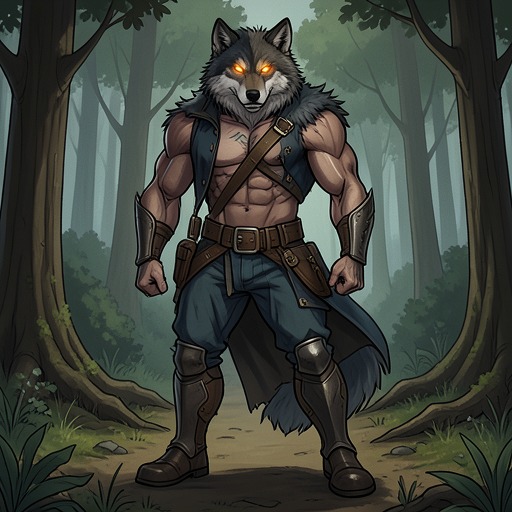
Riley
The Vampire Prince’s BrideRiley is the infant daughter of Clara Maddison and Nathaniel Snyder, and her brief appearance at the end of their story carries a decisive significance: she makes the couple’s supernatural future visible in the ordinary space of a family home. At six months old, she is already mobile, strong enough to destroy ordinary teething rings, and equipped with razor-like teeth. Her rapid development is explicitly attributed to her father’s genes, making her not merely a child in the domestic epilogue but living evidence of the inherited werewolf or shifter condition that shapes her family.
Identity and Family Background
Riley enters the narrative shortly before the conclusion of Clara Maddison and Nathaniel Snyder’s arc. Clara has reached the nine-month mark and resigns from her position within the company before the child’s birth, intending to spend Riley’s first year or two at home rather than abandon her career permanently. Nathaniel has been reluctant to see Clara leave the business for so long, but he accepts the arrangement because he cannot remain at home with the baby himself. Riley’s birth therefore reorganizes both parents’ working lives and turns their relationship into an explicitly shared household and parental responsibility.
Riley is also the child through whom the book makes the family’s mixed human-and-werewolf inheritance concrete. Her father’s genes allow her to progress “far more quickly than an average child,” and the narration links that accelerated development to the unusual demands of caring for her. The evidence does not assign Riley a formal supernatural title or describe a completed transformation, but it clearly establishes that her inherited biology is already active in infancy.
Early Development and Daily Life
At only six months old, Riley is completely mobile and explores the backyard independently enough to seize a stick and put it in her mouth. Clara immediately scoops her from the ground and scolds her, performing the familiar protective work of a parent while confronting a child whose physical abilities exceed normal infancy. Riley’s mobility is not presented as a single startling incident; it is part of a broader pattern of accelerated growth that keeps her parents constantly attentive.
Her teeth create a second, more specific sign of her unusual development. Clara observes that Riley repeatedly destroys her baby teething rings and then notices the little razor-like teeth with which the child chews on her own fist. The detail gives Riley’s infant body a dual quality: she remains small enough to be carried and soothed against her mother’s shoulder, yet she already possesses an animal sharpness associated with her father’s nature. Nathaniel responds by joking that she may eventually change shape randomly, while Clara focuses on the visible features she recognizes as her own contribution, including Riley’s eyes and hair.
Riley’s personality is conveyed through physical reactions rather than speech. She squeals and hides against Clara when Nathaniel greets his girls, babbles excitedly when he suggests lunch, and clings to his fingers as he carries her inside. Her growls and squeaks are endearing to Clara, who cannot imagine waking without happiness at the prospect of holding her daughter. These sounds make Riley an active emotional presence in the household even before she can speak, allowing affection to circulate through gesture, touch, and response.
Relationships with Clara and Nathaniel
Riley’s relationship with Clara is defined by close bodily care. Clara rescues her from the stick, monitors her dangerous teeth, and recognizes that the child requires more attention than an average baby. The extra care is not treated as a burden. Clara welcomes the work because Riley’s unusual sounds and restless development deepen her happiness rather than diminish it. The child’s needs thus become a source of attachment and purpose, helping Clara inhabit a domestic role she once believed she would never choose.
Nathaniel’s relationship with Riley is playful and openly affectionate. He wraps his arms around Clara’s waist while kissing Riley’s face, laughs when the baby squeals, and later scoops her into his arms to begin lunch. His joking reference to future shape-changing places Riley within the family’s supernatural reality without making that reality frightening. The joke also establishes a contrast between the parents’ two ways of recognizing her: Nathaniel sees the possible animal inheritance immediately, while Clara insists on the human resemblance that confirms Riley as “very much” her daughter.
Riley’s teeth also reverse the direction of parental protection for a moment. When she bites Nathaniel’s finger, he lets out a squeak of pain, and Clara moves inside to rescue him. The scene preserves the tenderness of the family while acknowledging that Riley’s inherited strength will make ordinary parenthood stranger and more demanding. Her development is not abstract background information; it affects the smallest routines of feeding, play, teething, and carrying.
Change, Continuity, and Ending
Riley’s appearance closes the family’s narrative with a domestic image rather than a political or violent climax. Clara watches Nathaniel and their daughter move through the kitchen and admits, through the narration, that she never expected to be so happy living this kind of life. She had insisted that she would never marry or have children, yet Riley’s presence makes that earlier refusal part of a completed transformation. The child is therefore connected not only to Clara’s motherhood but also to the unexpected future Clara has accepted with her husband.
The household remains far from conventional. Riley’s accelerated growth, razor-like teeth, possible future shape-changing, and need for exceptional attention prevent the family from becoming an ordinary domestic tableau. Yet the narration treats these differences as compatible with contentment. Clara’s world is strange, but the strangeness is precisely what makes the final image complete rather than broken. Riley does not need to become normal for the family to be happy; her inherited difference is folded into their idea of home.
The final image centers on the mark on Clara’s arm that combines her and her mate. As the mark grows warm, Clara approaches Nathaniel and takes Riley into her arms. The warmth links the child to the parents’ mate bond and gives the ending a physical sign of continuity across generations. Riley is held at the point where Clara and Nathaniel’s relationship becomes family, while her presence confirms that the bond has produced a future rather than merely survived a conflict.
Narrative Significance
Riley functions as an epilogue figure whose body gathers several of the book’s recurring concerns: inheritance, the coexistence of human and animal identities, unconventional family structures, and the possibility of tenderness after danger. Her rapid development and sharp teeth preserve the supernatural stakes of her parents’ story, but her squeals, babbling, and attachment to both parents translate those stakes into intimate domestic life.
Her significance also lies in contrast. Elsewhere, questions of inherited biology and reproduction become matters of public crisis, scientific experimentation, or ethical conflict: Shay refuses to allow Gemma or her unborn child to be experimented on even when fetal DNA is described as potentially more potent, and the debate turns on whether desperate collective need can override consent. Riley’s story presents inheritance from the opposite direction. No institution claims her body, and no researcher defines her value. She is encountered as a daughter whose unusual genes demand care, affection, and adaptation rather than extraction.
That contrast makes the final household quietly consequential. Riley’s accelerated infancy could have been framed as a threat, but the parents respond through protection, humor, and shared responsibility. The child’s future remains open—Nathaniel can only joke about when she might begin changing shape—but the ending establishes the emotional conditions in which that future will unfold. Riley leaves the narrative not as a solved mystery or completed transformation, but as the living promise that her family’s strange inheritance can continue without sacrificing love.